When I returned from the Study of the U.S. Institute (SUSI) for Student Leaders on Civic Engagement, funded by the U.S. Department of State, I carried home a mini-grant and a question: what if the places young people already spend their weekends could become something more? That question became Musimboti, a youth-led initiative to turn local gaming centers and community spaces in disaster-affected and underserved regions, including areas like Chimanimani, into informal hubs for digital literacy, career guidance, and mentorship.
The idea was simple. Don’t wait for a dedicated computer lab or a new building. Meet young adults where they already gather, and give them skills they could use the following Monday: how to operate a computer, prepare a document, write a CV, type with confidence, and navigate a job or tertiary application online.
Meeting them where they are
We partnered with local community hubs and gaming centers for venue access, building trust with space owners until the sessions felt like a natural part of the weekend rhythm rather than an outside intervention.
Every session ran on personal laptops brought in by me and a small team of volunteers. There was no fixed lab. We set up, taught, packed down, and came back the following Saturday. It was scrappy by design, and it worked because the venues were already there.
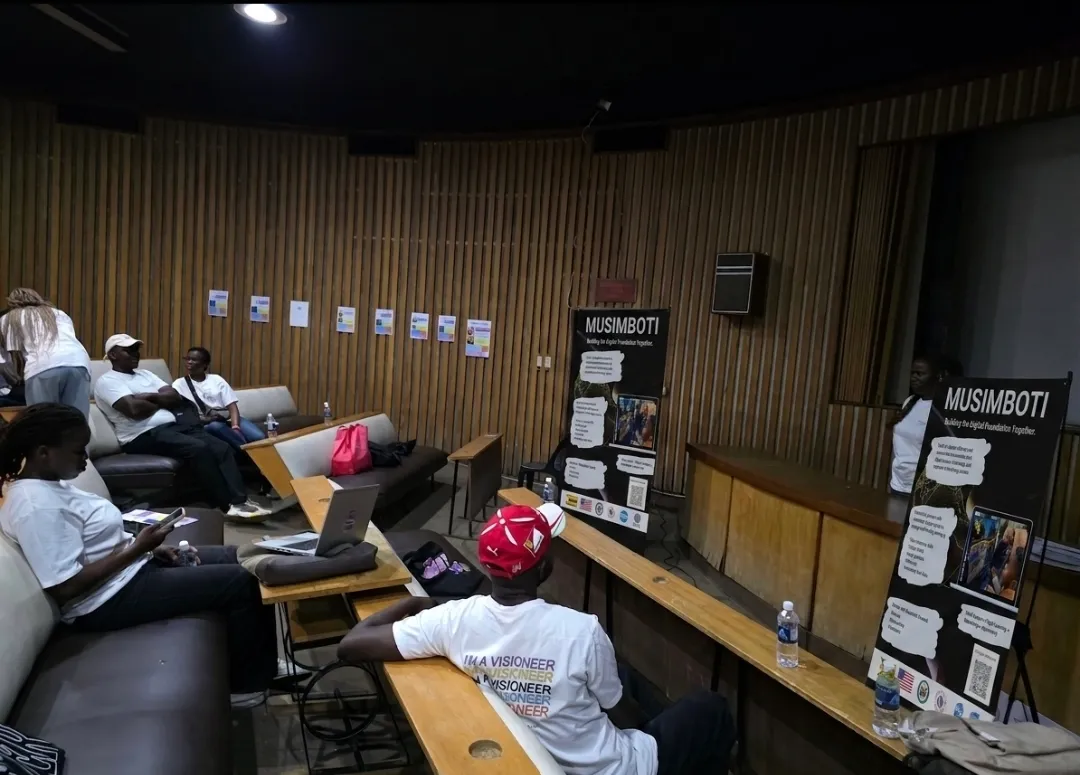
A weekend Musimboti session underway at a partner community gaming hub.
We taught fundamental computing, document preparation, and typing. Participants left with custom, professionally formatted CVs, basic computing proficiency they could demonstrate, and workshop handbooks we could reuse across sessions. Biweekly one-on-one and group career guidance brought in local graduates and working professionals to talk through career direction, application strategy, and interview readiness.
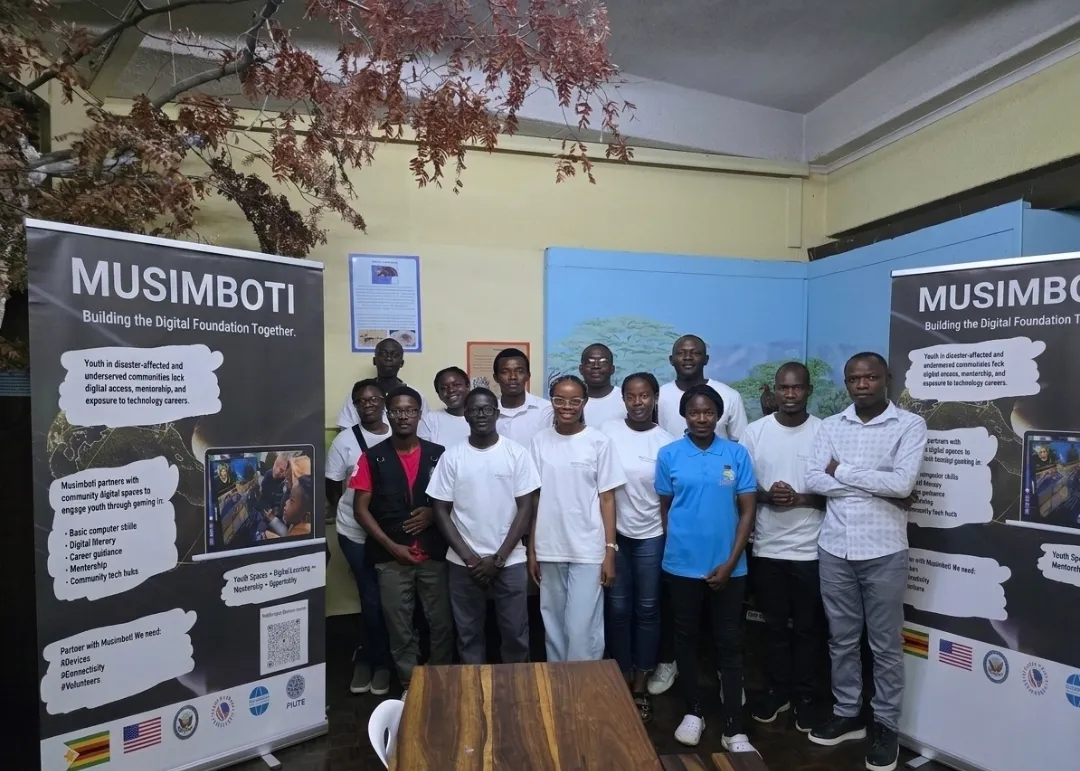
Hands-on document preparation: participants drafting and formatting their CVs during a workshop block.
Attendance held steady throughout, and I think the reason is honest: after the learning block, we ran monitored gaming sessions as a reward. It kept people coming back, built teamwork in a low-pressure way, and slowly changed how the community saw these spaces. A gaming center stopped reading as an unproductive hangout and started reading as somewhere worth showing up to on a Saturday morning.
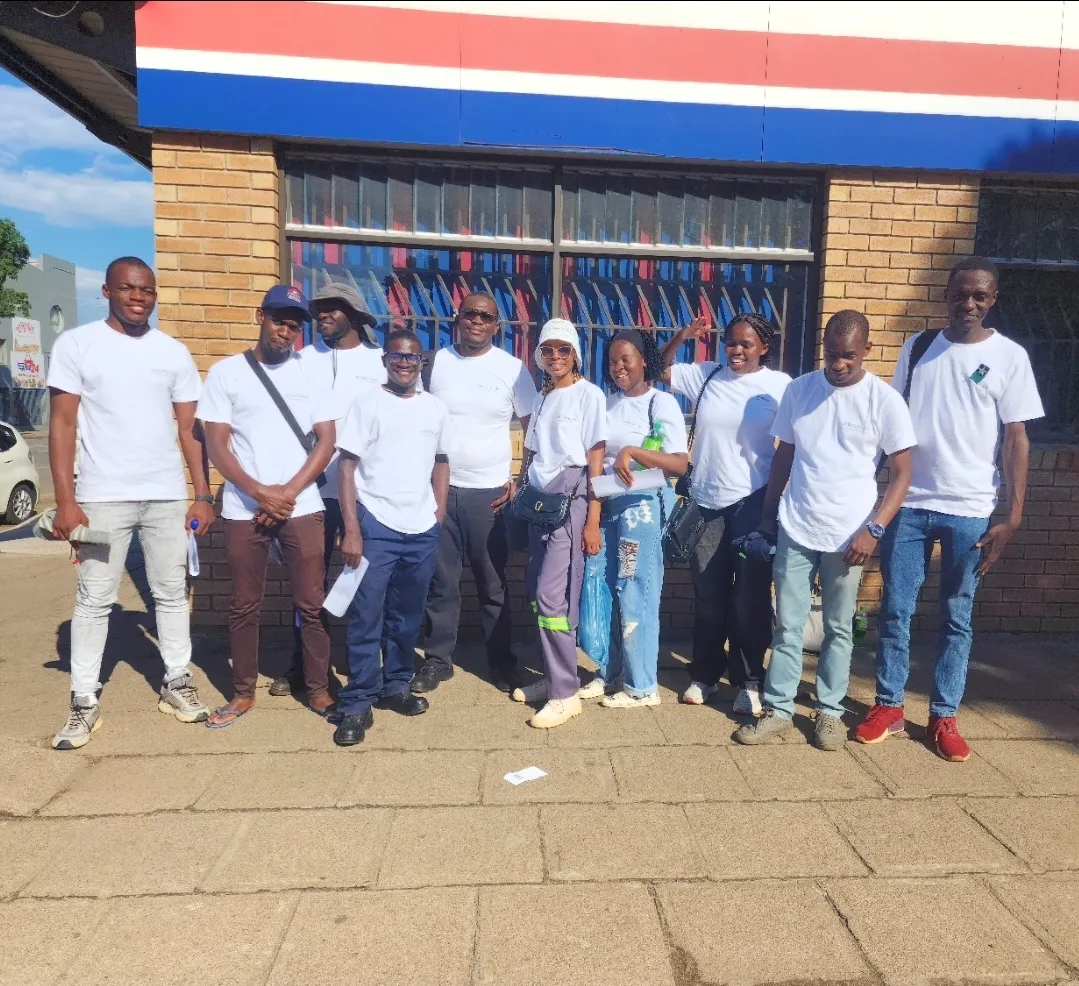
A group career guidance session with local graduates and professionals.
Participant feedback echoed that shift. People spoke about a real jump in digital confidence and a clearer sense of where they wanted to go next. Several told us they applied for tertiary programs or job listings for the first time using documents they had built in the room.
Weekends, exams, and what we had to leave on the table
We ran everything on weekends only. Most of the young people we wanted to reach were school candidates preparing for national examinations, and weekday sessions would have meant choosing between Musimboti and the work that would define their immediate future. That constraint shaped the whole delivery model.
Recruitment also had to stay focused on participants aged 18 and over, at least within the SUSI project window. Parental consent for younger cohorts takes time we did not have on a short grant timeline, though documenting those requirements is part of how we plan to expand later.
We had originally planned mini innovation hackathons as a capstone: kits purchased, prizes ready, mentors lined up. In the next phase, we still intend to run them. We were not able to pull them off in this round because exam and school-candidate schedules left almost no contiguous weekend runway, and the age and consent logistics made it harder to assemble the cohort we had envisioned on the timeline we had.
There was a practical layer to that delay as well. Several of our volunteers were university students who lent their laptops and time every Saturday until academic commitments pulled them back to campus, taking the hardware with them before we could host the hackathon. When your lab is whatever people can carry in a bag, losing two or three machines at the wrong moment is not a small problem.
We redirected the remaining energy toward what participants could use immediately: core career guidance and basic document preparation, so they could compete in the job market or tertiary entry pipelines without waiting for a future event.
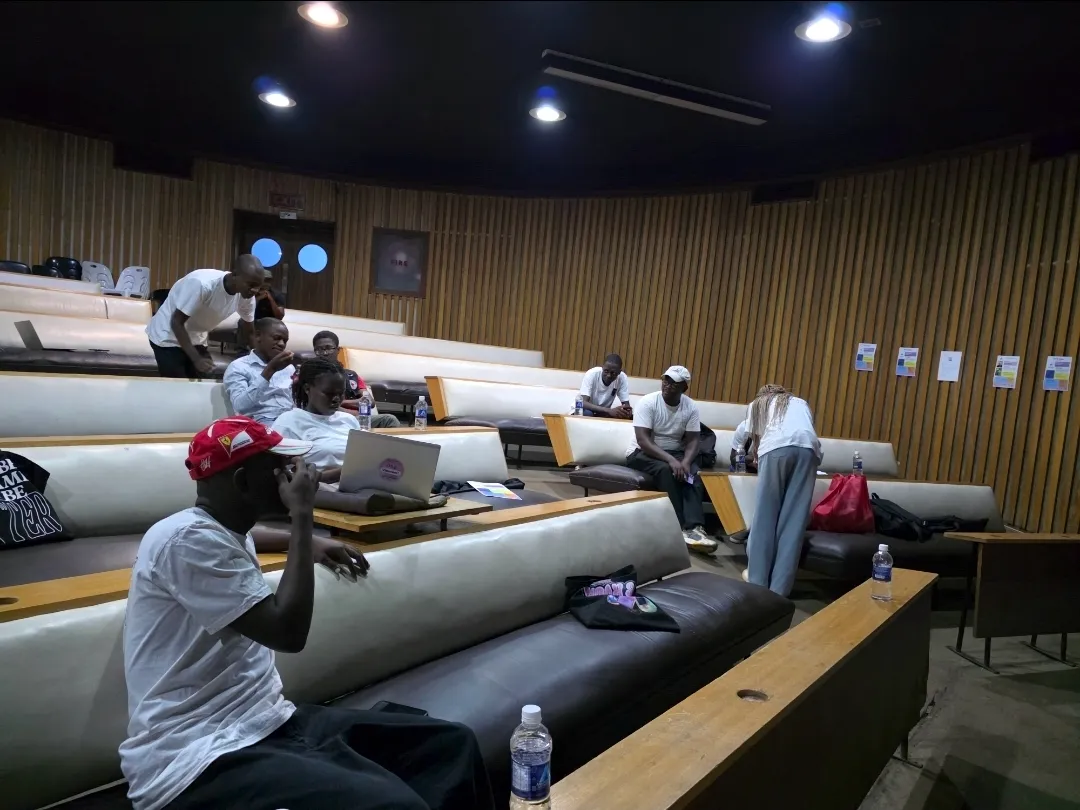
Digital literacy in action: participants building foundational computing skills at a local hub.
What SUSI changed in how I think about this work
Musimboti would not look the way it does without SUSI. The program pushed me toward systems thinking: map what a community already has before designing what it needs. Gaming centers were not a compromise. They were the asset. The grant did not need to buy a building; it needed to activate spaces people already trusted.
That same lens kept the project community-centered. Space owners, local graduates, and working professionals were not backdrop. They were the delivery mechanism. Sustainability lives in those relationships more than in any single piece of equipment.
What comes next
The weekend workshop model is ready to scale to more underserved communities across Manicaland and beyond. We want to open the program to younger cohorts under 18 by building formal school-parent consent pipelines before launch, rather than improvising around them mid-project.
The deferred mini hackathons are still on the table, kits, prizes, mentor network, and partner hubs included. This phase proved the rooms and the relationships work. The next phase is where we test whether those rooms can also produce prototypes.
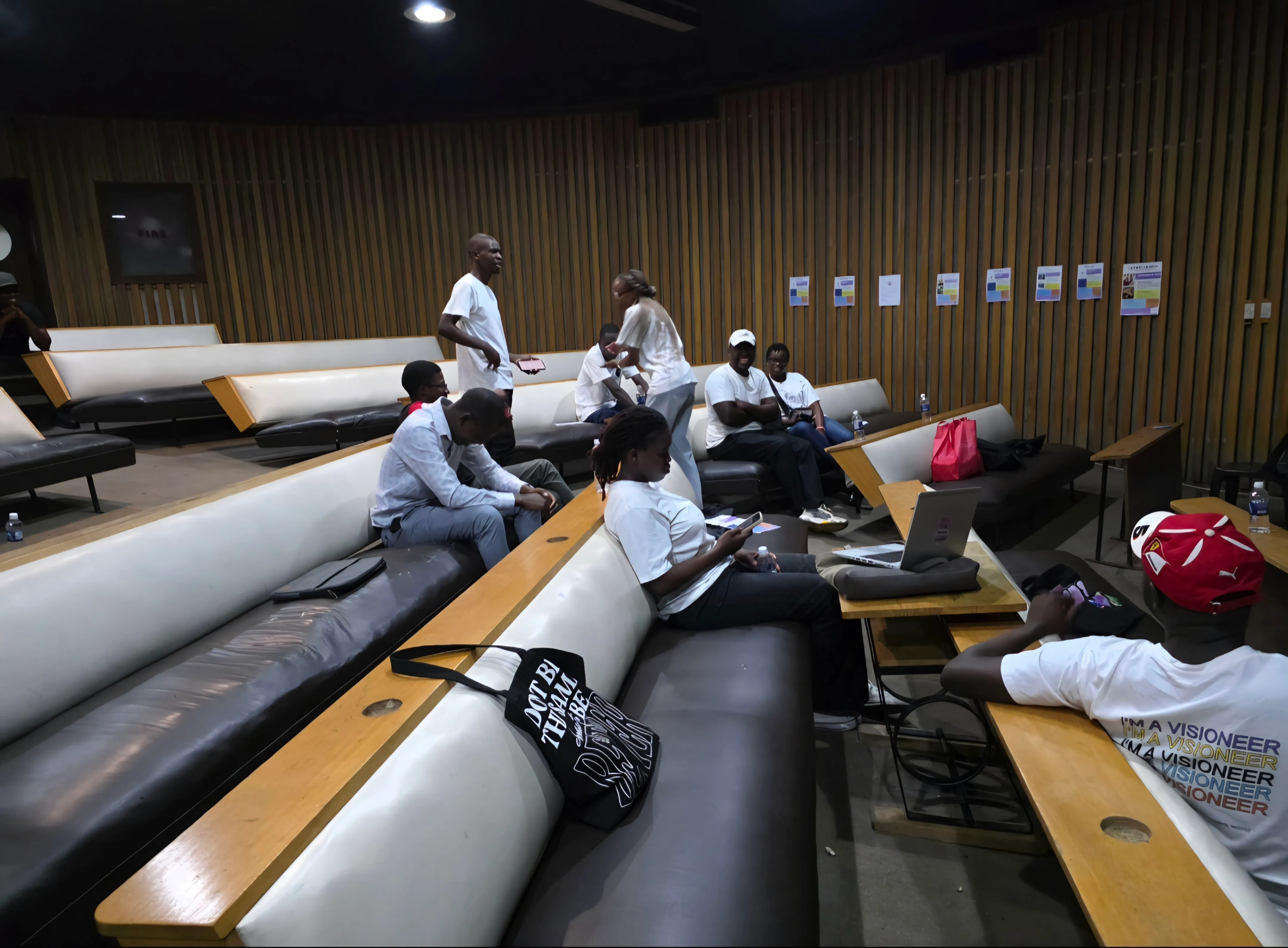
After the workshop block: structured gaming time that kept participants coming back week after week.
Musimboti started as a grant deliverable. It ended up feeling like proof that the most durable civic work begins where people already are, with what they already have, on the schedule their lives actually run on.