In October 2024, in Kigali, Rwanda, our team took first place at the Llama 3.1 Impact Pan-African Hackathon — an AfriLabs event backed by Meta and the Bill & Melinda Gates Foundation. Our project was Ithute AI, an open-source education engine.
The technical work was hard. But the leadership work was harder, and more important.
The setup
It was a three-day gig, fully funded by the Gates Foundation and Meta, and administered by AfriLabs. There was a pool of 100 participants, and you had to form teams of five to make 20 teams. Some participants didn’t make it, so we formed a team of four from Southern Africa — three of us from Zimbabwe and one from Botswana.
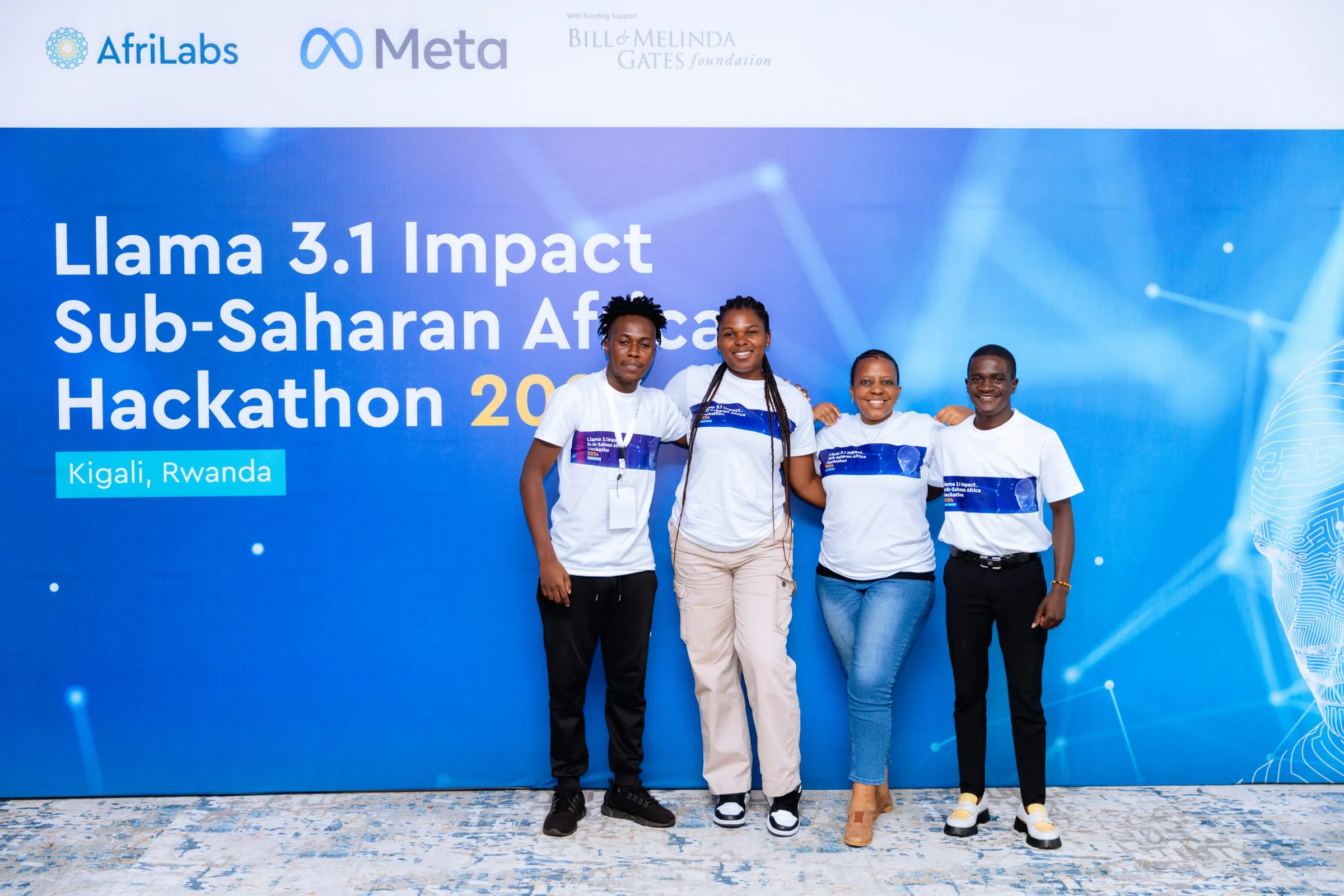
From right: Wellington Gombarume, Agang Ditlogo (Botswana), Trish Ngarize (Zimbabwe), and Kudzaishe Bhuza (Zimbabwe).
About the hackathon
The Llama 3.1 Sub-Saharan Hackathon Kigali, scheduled for October 7th to 11th, 2024, is a dynamic AI-focused event that gathered top developers, innovators, and tech enthusiasts from across Sub-Saharan Africa. Hosted by AfriLabs, this hackathon aimed to leverage the power of Llama 3.1, an advanced AI tool, to solve some of the region’s most pressing challenges. Participants collaborated in teams to develop impactful solutions while prioritising inclusivity and diversity. The event centred around several key themes:
- Economic Development: Empowering small businesses and fostering economic growth through scalable solutions.
- Science and Innovation: Addressing issues in climate change, health, agriculture, and infrastructure using innovative technologies.
- Public Services: Improving the efficiency and effectiveness of government service delivery and resource allocation.
- Education and Skills Development: Enhancing educational outcomes and accessibility, particularly for underserved communities.
- Gender Sensitization: Promoting gender equality and inclusivity by developing tools that address the unique challenges faced by women and marginalised groups.
The full brief we were given going in is here: Llama SSA Hackathon Handbook, Kigali Rwanda (PDF).
Here is AfriLabs’ own overview of what the hackathon set out to do:
The 72-hour solution
Under the Education and Skills Development theme, we built Ithute AI from scratch inside 72 hours — a multilingual, personalised learning tool leveraging Meta’s Llama 3.1 to deliver localised, bias-free educational support to African learners through the social spaces they already use.
Here is the solution we developed in those 72 hours — the one that secured the win, and a surprise $12,000 USD prize from Meta that we honestly didn’t expect:
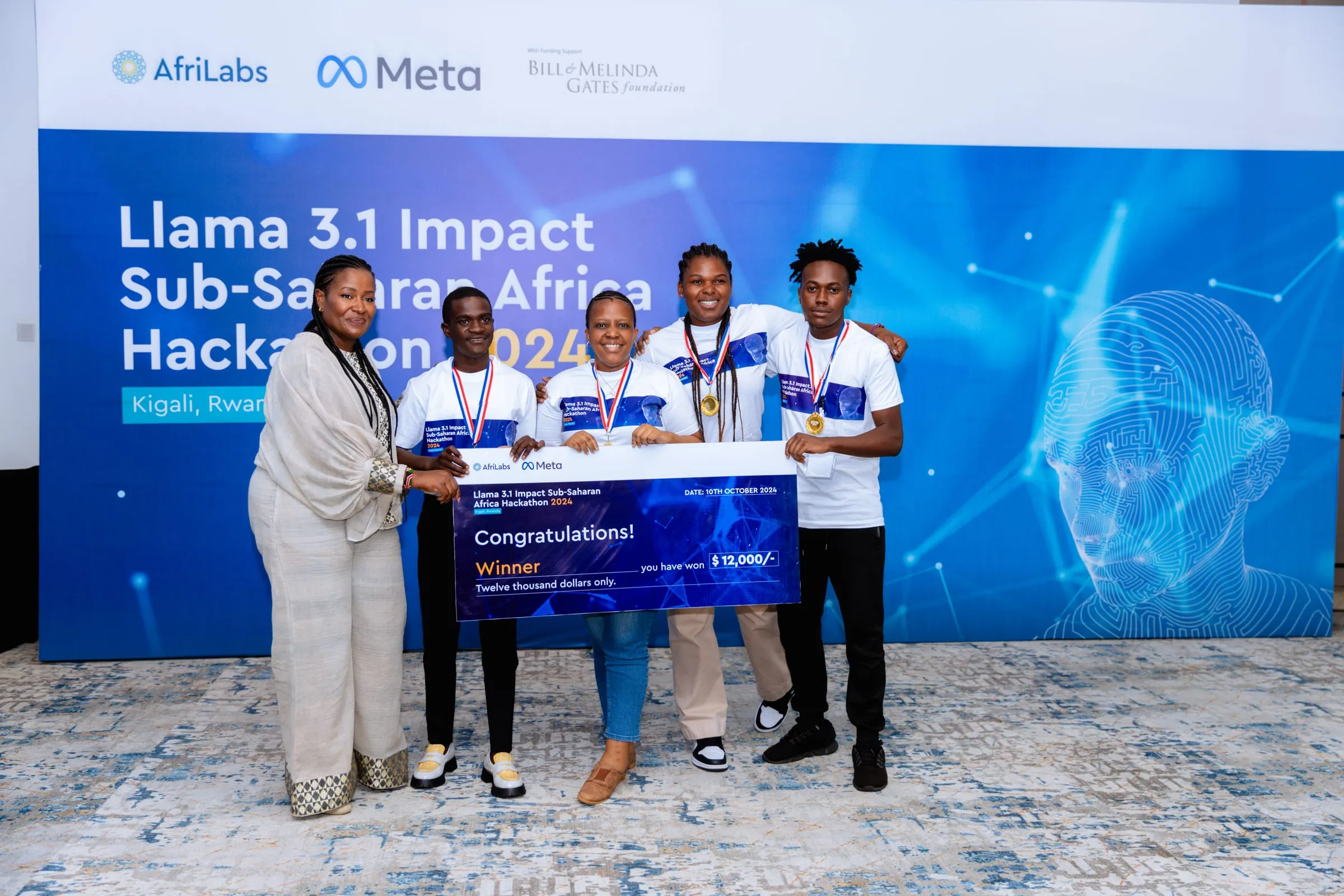
Inside Ithute AI
Ithute AI is an AI-driven learning buddy designed to bridge the educational gap and preserve culture for children — especially girls — in underserved areas of Sub-Saharan Africa. Three ideas sit at the core of it.
1. Cultural preservation & native-language education
Unlike standard educational platforms that lean primarily on global languages, Ithute AI leverages native language detection and support — starting with Setswana and Shona — to make content accessible. The learning material itself is designed to resonate with local contexts, preserving local heritage while still advancing academic reach.
2. A community-driven hybrid AI engine
Ithute AI is built as a layered architecture on top of Meta’s Llama 3.1 base model, combined with a localised content repository and real-time custom processing. When an answer can’t be found in that repository, Llama’s reasoning automatically routes the question to a community pool of teachers and mentors — a human-in-the-loop backup rather than a dead end. Those teachers and volunteers earn points and rewards for answering unresolved student queries, and those answers feed a continuous feedback loop that trains, fine-tunes, and expands the localised AI dataset over time.
3. An accessible, gender-sensitive platform
Learners interact with the tutor directly via WhatsApp — no app install, no new account, no data-hungry platform to learn. It handles simple text queries, generates practice questions, finds past exam papers, and can even parse a photo of a handwritten math or science problem. It’s also deliberately built with a gender-sensitive lens, targeting the specific learning barriers young girls face in underserved communities with personalised, adaptive support in a safe digital environment.
Where it stands apart
| Feature | Competitors (e.g. Masakhane, Vulavula) | Ithute AI |
|---|---|---|
| Local language focus | Yes | Yes |
| Generative AI support | Limited / none | Yes — powered by Llama 3.1 |
| Community-built dataset | No | Yes — crowdsourced teacher responses |
| Continuous training | No | Yes — real-time feedback loop |
| Gender-sensitive lens | No | Yes |
In short: Ithute AI turns local-language barriers into educational opportunities by pairing open-source generative AI with a community-powered teacher network on the platform learners already use every day, creating a self-improving, localised learning ecosystem for Sub-Saharan Africa.
Three things I learned
1. A shared “why” beats a shared timezone
Our team spanned different countries and backgrounds. What aligned us was not a project plan — it was a shared conviction that a student in a rural classroom deserves the same quality of explanation as one in a well-funded city school.
2. Ship the smallest thing that proves the point
We resisted the urge to build everything. We built the one interaction that made a judge (and a learner) feel the value in ten seconds.
3. Open-source is a strategy, not a checkbox
Making Ithute AI open wasn’t an afterthought. In a resource-constrained region, the ability for others to fork, adapt, and localise is the difference between a demo and a movement.
As one mentor at the UNESCO bootcamp in Angola later put it to me: “as long as somebody in Africa has done it, I can do it.” Leading that team in Kigali was the moment I started believing that about myself.