In September 2024, I travelled to Luanda, Angola, to represent Zimbabwe at the UNESCO–IEEE Entrepreneurship Bootcamp for Early-Career Engineers, held on the sidelines of the 10th UNESCO Africa Engineering Week and 8th Africa Engineering Conference at the InterContinental Luanda Miramar.

Angolan traditional dancers welcoming guests at the InterContinental — the opening notice that this conference was as much a celebration of African culture as it was a policy gathering.
Why I was there
The bootcamp is organised in collaboration with UNESCO, the World Federation of Engineering Organizations (WFEO), and the Federation of African Engineering Organisations (FAEO), and hosted by the Order of Engineers of Angola (OEA). It’s built for early-career engineers — students still in engineering programmes and young practitioners who want to learn the entrepreneurial skills needed to turn a scientific idea into something commercially viable. Thirty-three of us travelled in from ten African countries besides Angola for an intensive three-day programme.
I pitched Hextech, a portable smart adapter that lets users track and optimise their electricity use at the appliance level — the idea that would later grow into Gwenya. It took first place at the bootcamp, but the more lasting outcome was learning to defend a technical idea in business terms, in a room full of engineers from a dozen different regulatory and market contexts.
You can see the original call for participants here: UNESCO–IEEE Entrepreneurship Bootcamp for Early-Career Engineers, African Edition, invitation letter (PDF).
A continent’s engineers, in one room
The bootcamp ran alongside the main conference, themed “Engineering the Future: Innovative Infrastructure Solutions for a Sustainable Africa and a Swift AfCFTA Implementation,” with sub-themes on sustainable infrastructure, accelerating the African Continental Free Trade Area (AfCFTA), and engineering education and capacity building. Over 250 engineering practitioners attended in person, joined by more than 1,000 online delegates from 23 countries — Angola, Zimbabwe, Nigeria, Kenya, Ghana, the DRC, Rwanda, Tanzania, Zambia, and more. A keynote address came from the Honourable Minister Mário de Oliveira, Angola’s Minister of Telecommunications, Information Technology and Social Communication, alongside a dedicated Women in Engineering conference and a Young Engineering Professionals panel session.
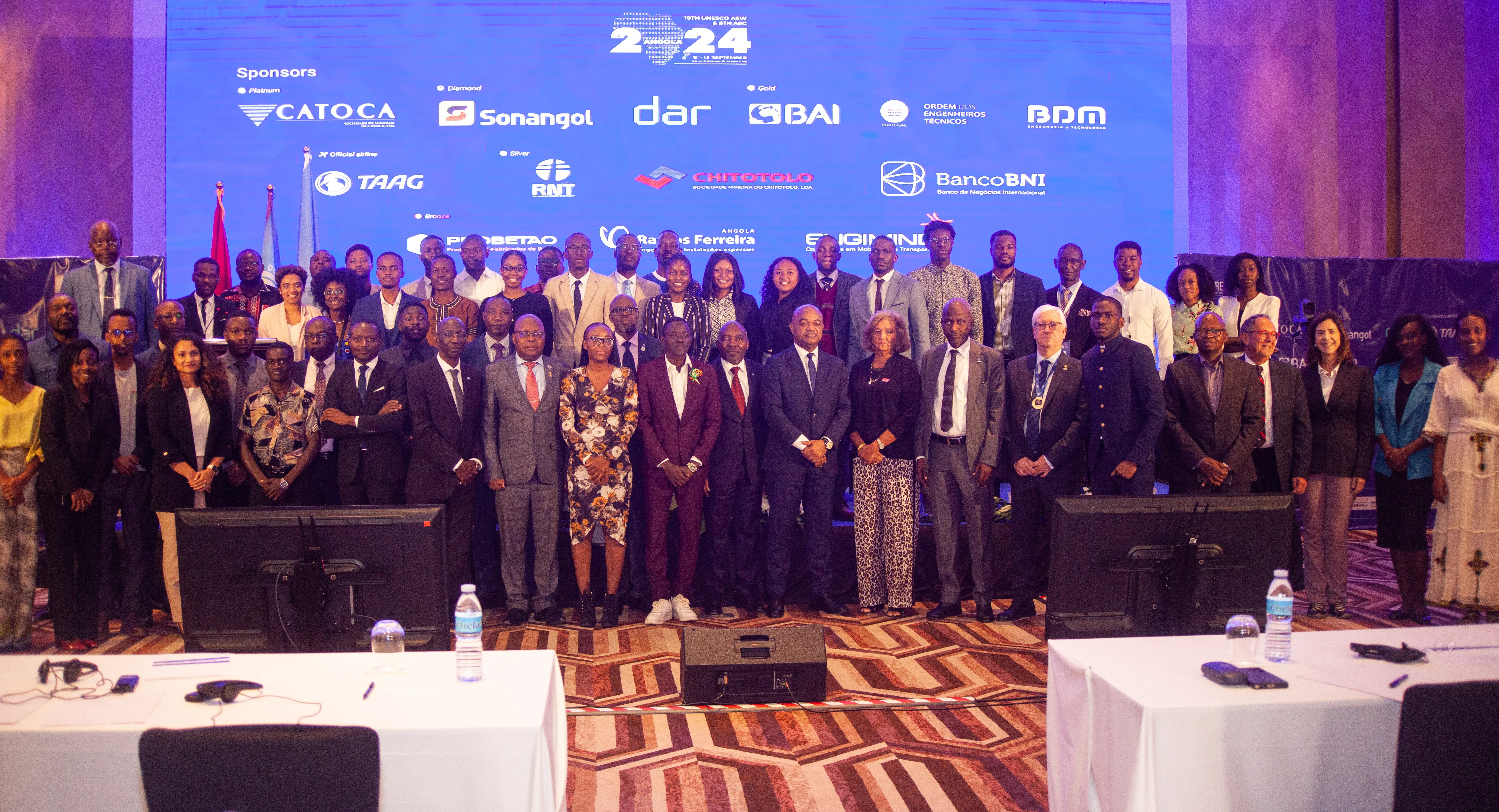
Some of the bootcamp and conference participants — can you spot me?
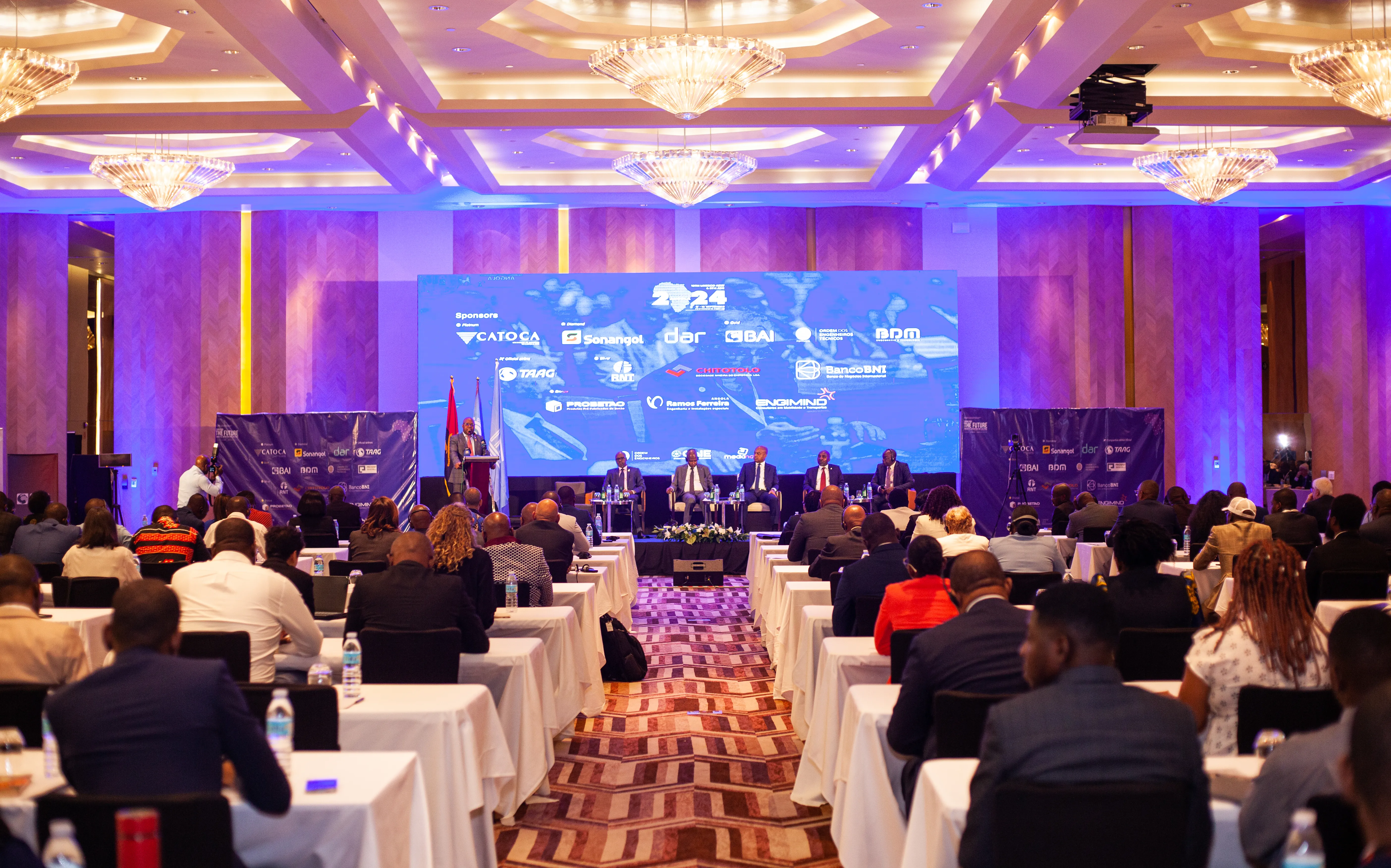
Moments from the technical sessions — the same rooms where the resolutions below were drafted and debated.
What the continent’s engineers actually resolved
Watching delegates negotiate a formal set of resolutions taught me something a bootcamp pitch never could: how engineering policy gets made at continental scale. On 12 September 2024, representatives of OEA, WFEO, FAEO, and national engineering institutions signed off on resolutions across three areas that I keep coming back to in my own work:
1. Innovative infrastructure development. A call to develop local solutions to sustainable power and renewable energy supply through international partnerships, and to build a professional, coordinated voice that can advise policymakers on infrastructure — something I felt directly, having flown in to pitch a device meant to make electricity use in Zimbabwe more transparent.
2. Engineering capacity development. Commitments toward an African Engineering Education Accord, an African Engineering Mobility Framework, and an accreditation manual to fast-track African institutions into the International Engineering Alliance — explicitly framed as a way to decolonise engineering education systems and align them with local context rather than inherited ones.
3. Diversity and inclusivity. A dedicated set of resolutions on women and youth in engineering: STEM investment, mentorship pipelines, gender-sensitive workplace and mobility policies, and initiatives like hands-on robotics boot camps and AI clubs aimed at getting more young girls into STEM early.
The resolutions were signed by OEA President Eng. Almeida Neto, WFEO’s Chair of the Engineering Capacity Building Committee Eng. Martin Manuhwa (fittingly, hosted by Zimbabwe), FAEO President Eng. Papias Kazawadi, and WFEO President Engr. Mustafa Shehu. You can read the full signed document here: 10th Africa Engineering Week Resolutions, 12 September 2024 (PDF).
What I took from it
It’s easy, as a young engineer, to think of policy documents as background noise to the “real” work of building things. Luanda changed that for me. The infrastructure gaps those resolutions named — limited licensed engineering capacity, constrained skills mobility across borders, thin research and data on African engineering — are the exact gaps that projects like Hextech, and later Gwenya, are trying to close from the ground up. Continental policy and a single smart adapter prototype turned out to be answering the same question from opposite ends: how do African engineers build infrastructure that’s actually ours, on our own terms.